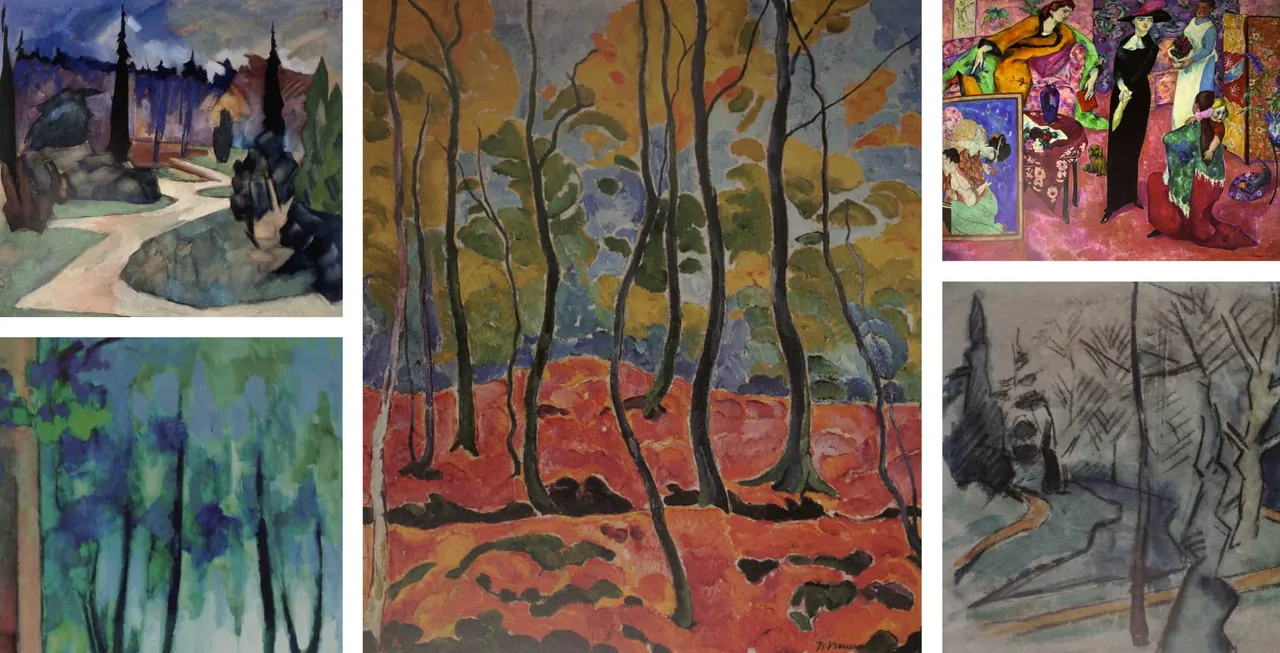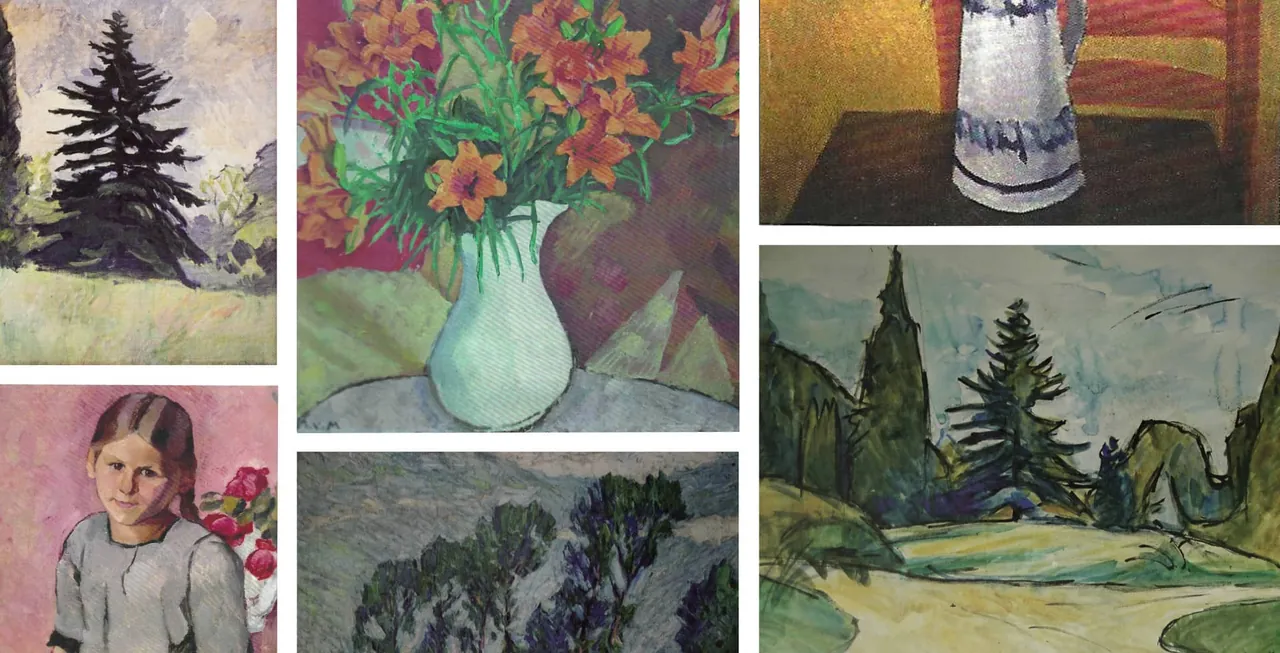
In 1904 the two exhibited together at the “Große Kunstausstellung Dresden”. On 28 March 1905, Heinrich Nauen and Marie von Malachowski married in Dresden, against the wishes of her parents.
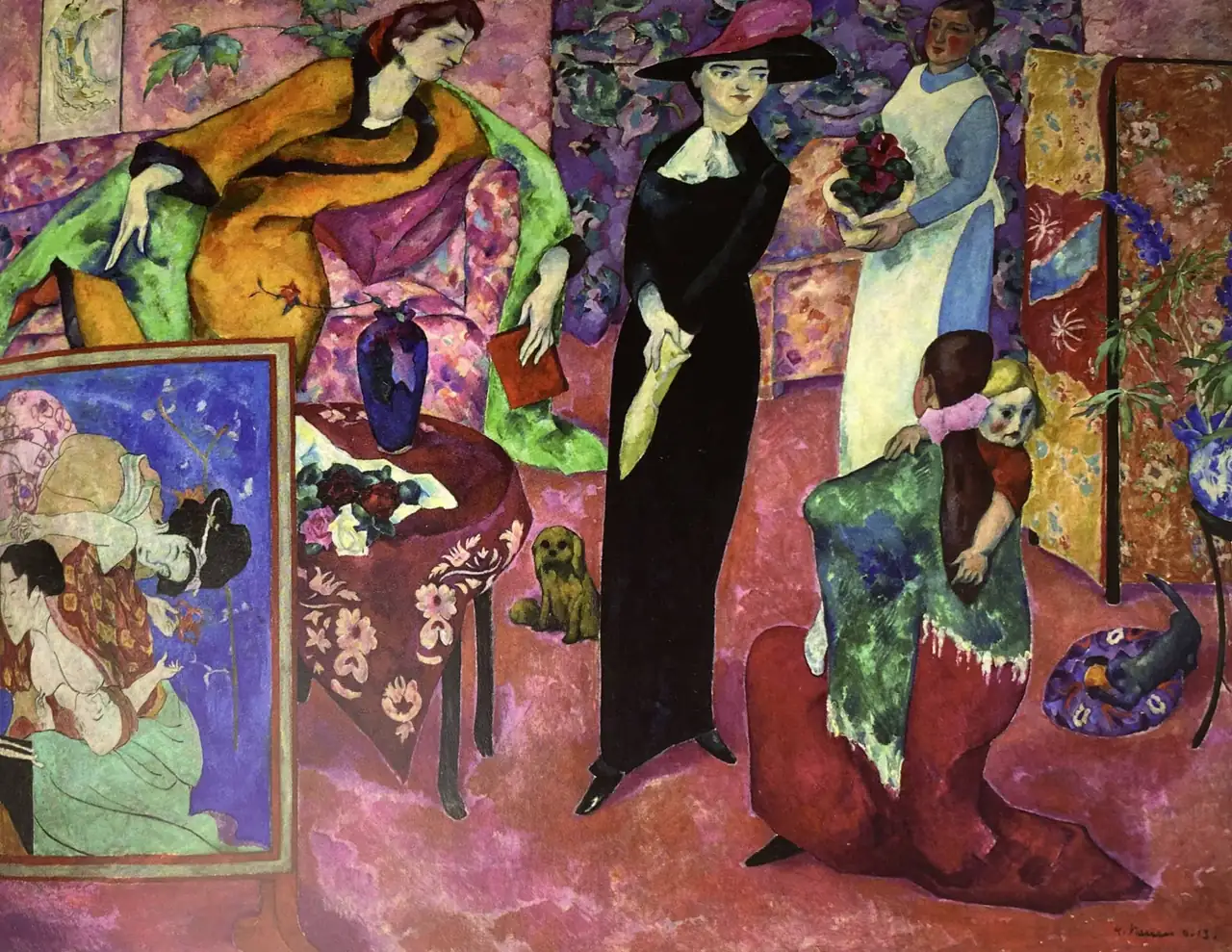
Their honeymoon in Paris became a stay of several months, with studies at the Académie Julian and encounters with other artists. The young couple witnessed the birth of Fauvism, the art of strong, pure colour. The impressions of Matisse and Gauguin stayed with Nauen. On the journey home he discovered the fishing village of Visé on the Meuse, where he painted regularly until 1911.
In 1906 the couple moved into a flat in Berlin. Nauen found his way into the Berlin Secession and came to know Emil Nolde, Max Liebermann, Max Beckmann and, above all, Walter Kaesbach, who became his friend, correspondent, collector and helper in times of financial need. 1907 was a restless year, marked by money worries and the death of their first son, Heinrich. On 3 October 1908 their daughter Nora was born in Berlin. City life weighed on Nauen, and the landscape of the Lower Rhine drew him in.
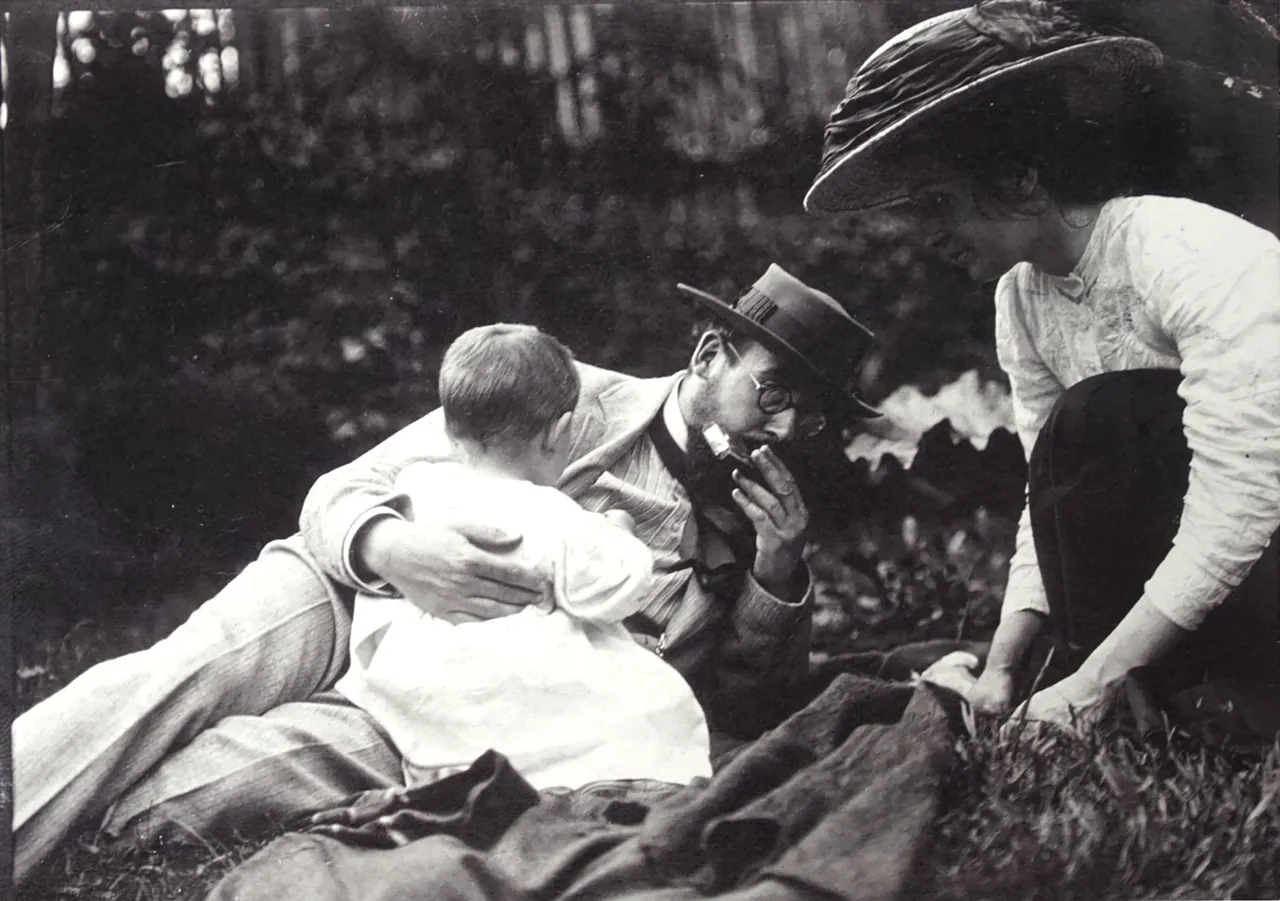
1911: “Happy owner of Dilborn”
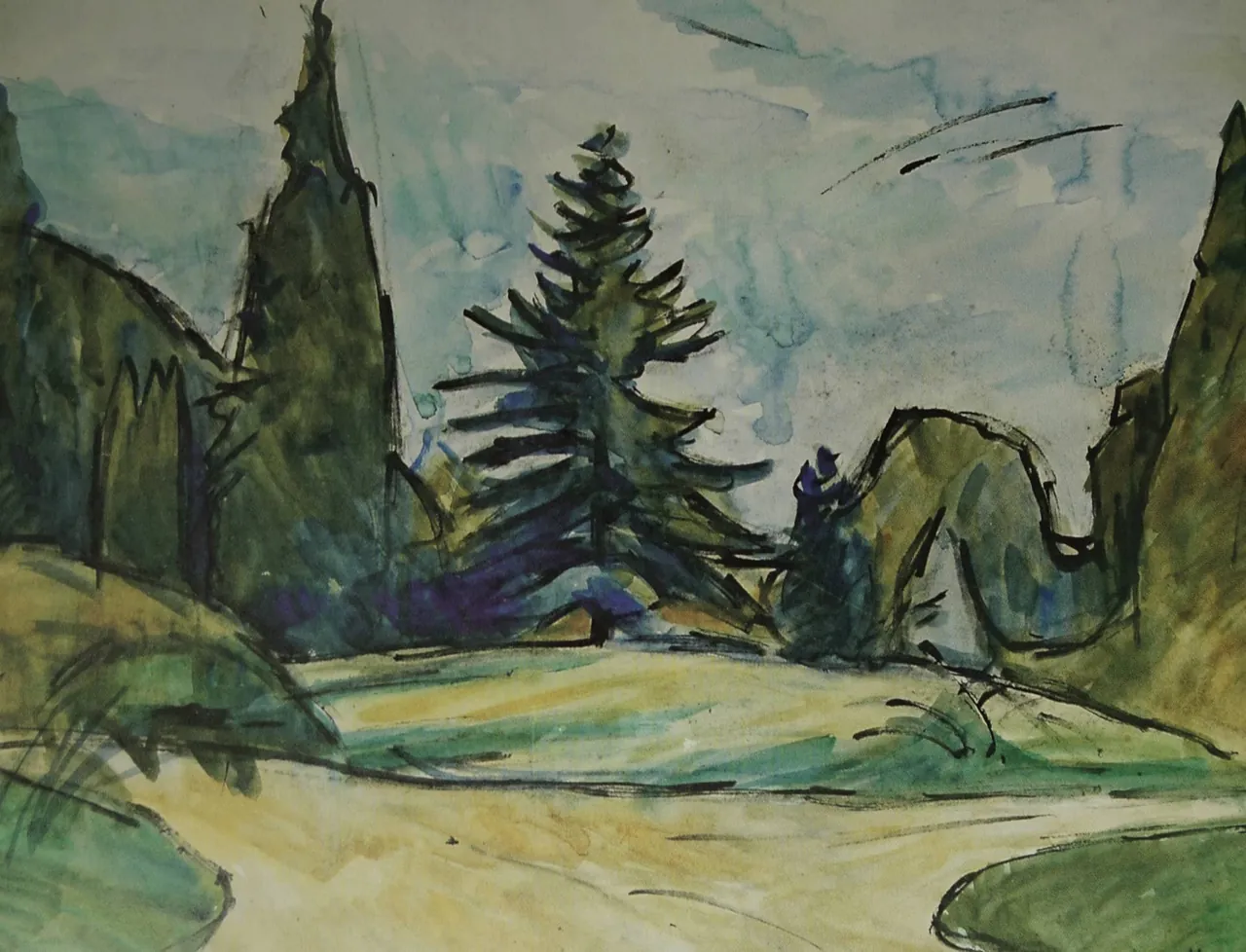
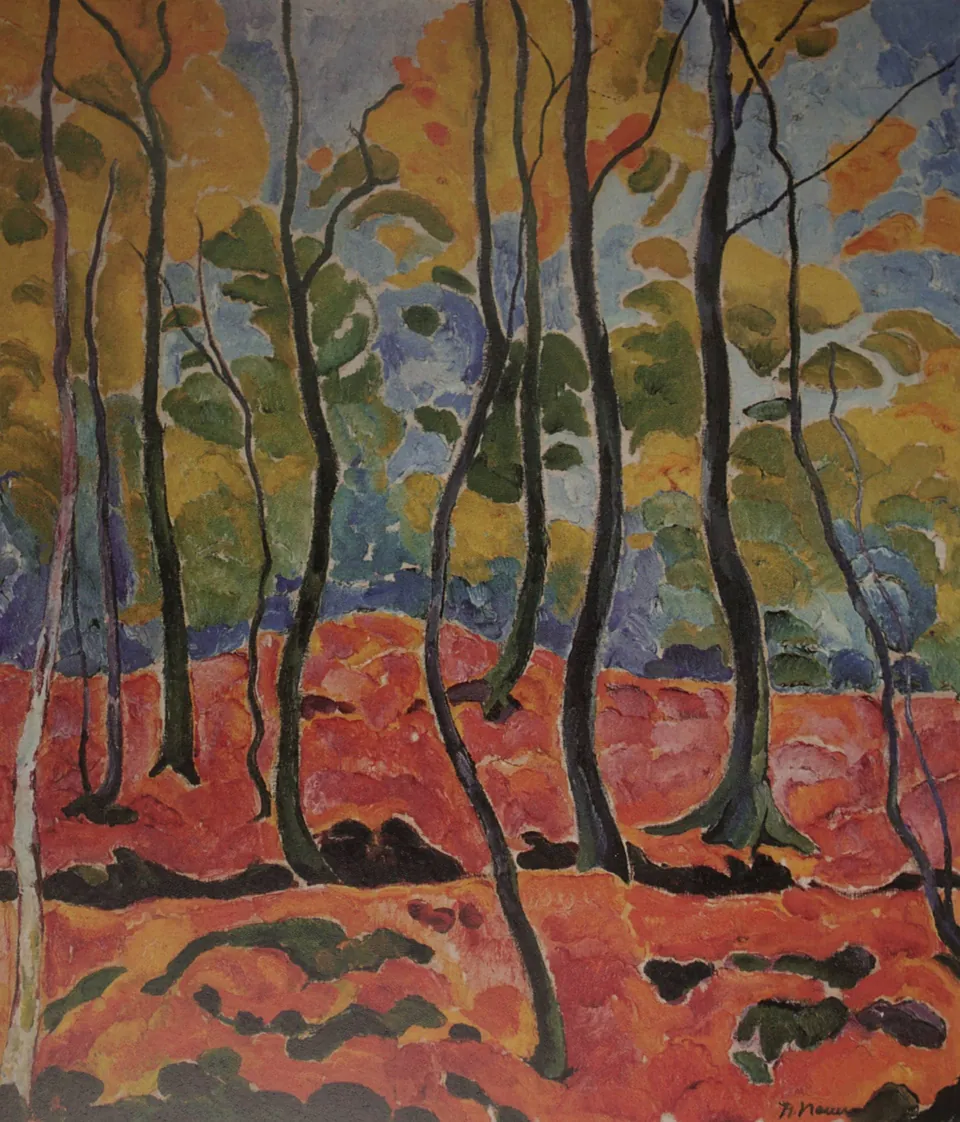
In May 1911 Nauen wrote to Kaesbach that he now lived in the most beautiful landscape he could imagine, with park, water, meadows, fields, marshland and heath, and the unique tall beech forest. On 1 June 1911 the family moved into the right wing of the castle. Spacious, colourfully decorated studios took shape, and sheets of paper lay in piles on tables and chairs everywhere.
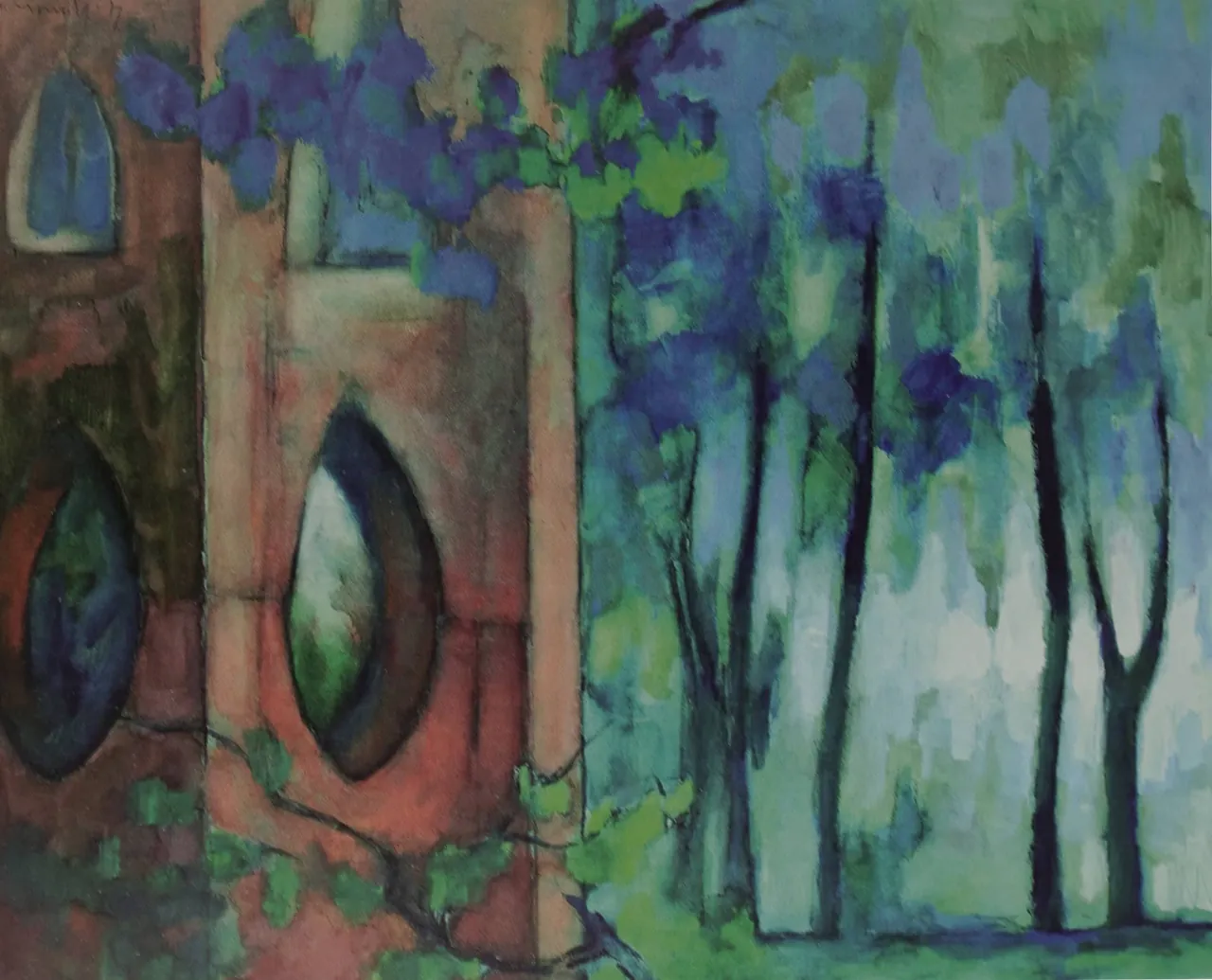
In the autumn, Nauen and Helmuth Macke painted the brilliantly coloured beech wood. Marie von Malachowski-Nauen made connections with neighbours, found fellow music lovers and soon began hosting concerts at the castle. In 1912 Edwin Suermondt invited Nauen to paint the side wing of Burg Drove near Düren. The Drove cycle, today in the Kaiser Wilhelm Museum Krefeld, was among the 137 works shown in 1914 at the first collective exhibition at the Galerie Alfred Flechtheim.
War and crisis
In the summer of 1914 Erich and Siddi Heckel came for several weeks; then the First World War brought this happy chapter to an end. At the start of the war Marie von Malachowski-Nauen lost her brothers Wilhelm and Joachim and fell ill for a long time. Her mother, Hedwig von Hake, lived at Dilborn from 1915 to 1919 and supported her. Heinrich Nauen was called up; shortly before, on 25 March 1916, their son Joachim was born. The war left its mark, which became clear after his return home in October 1918.
Marie von Malachowski-Nauen sought to regain her self-esteem through exhibitions, at a time when women's work was regarded as inferior. Only from 1919 were women allowed to study at art academies. Critics read her paintings as variations on her husband's art. Even so, in 1919 the Galerie Flechtheim showed her works alongside those of Paula Modersohn-Becker.
“Two can bear anything.” With this note in the guest book in 1920, Marie von Malachowski recalled the verse on her wedding picture.
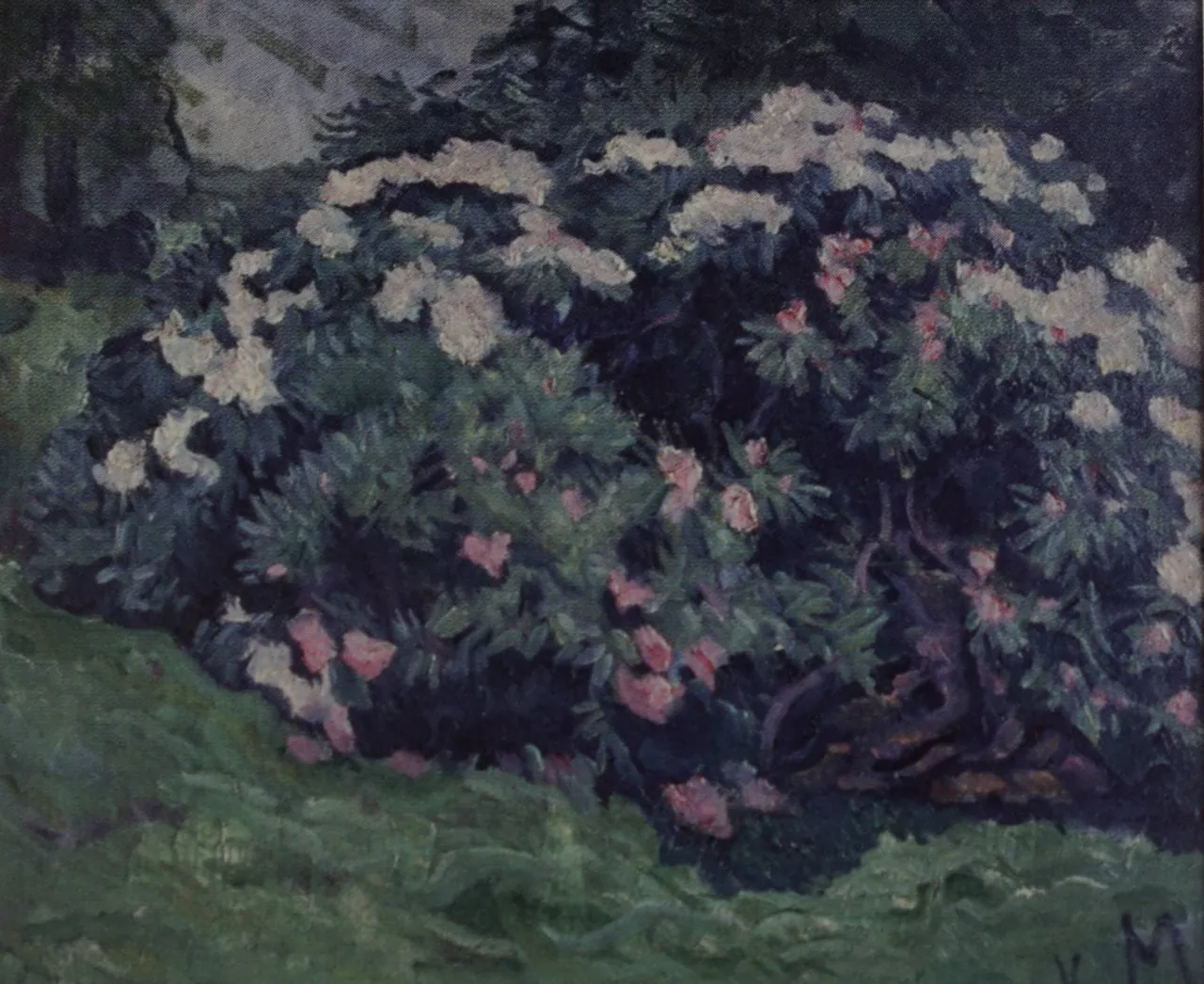
In November 1920 she moved to Worpswede with her son Joachim, but returned in March 1921, first to Brüggen and Millendorf, then back to Dilborn. From 1921, Nauen's professorship at the Düsseldorf Art Academy brought calm to their circumstances. He often came home only at weekends. From 1922 to 1924 she created religious, philosophical and allegorical woodcuts, and until 1931, in the seclusion of Dilborn, she worked on numerous portraits of children.
Farewell to Dilborn
On 1 October 1931 Heinrich Nauen became a full professor at the Düsseldorf Art Academy, and the couple moved to Neuss. His students, among them Otto Dix, Carl Barth and Trude Brück, revered him as an artist and as a person. In 1937 many works by both were removed from museums as “degenerate art”, and Nauen was forced to retire.
In 1938 the couple moved to Kalkar, where Heinrich Nauen died on 26 November 1940. In 1942 Marie von Malachowski's creative energy revived one last time, producing cheerful late works such as “Taubenturm in Kalkar hinter blühenden Apfelbäumen”. She died on 9 October 1943 in Kalkar, where the couple rest together. Their works live on, in Brüggen-Dilborn too.
Based on the research of Otto Lehmann.